
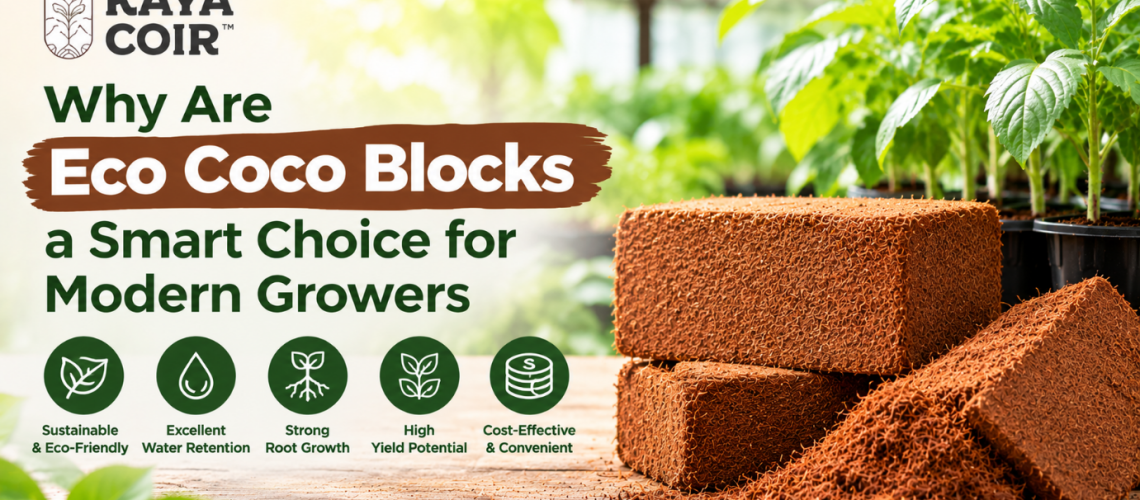
Eco coco blocks are compressed growing media made from coconut coir. They offer a practical way to grow plants while making use of coconut husks that might otherwise go to waste. When you add water, the blocks expand into a loose growing medium that can support root growth and help hold moisture. For growers looking for eco coco blocks in the USA, they can be a useful option for hydroponics, greenhouses, and container growing. At Kaya Coir, we focus on quality coco coir products that meet different growing needs. The right block can help you manage water, support healthy roots, and make storage and handling easier.
Table of Contents
- What Makes Eco Coco Blocks Useful?
- How Do Eco Coco Blocks Support Plant Growth?
- How to Choose the Right Coco Block
- Why Work With a Coir Company in the USA?
- Find the Right Eco Coco Blocks With Kaya Coir
- Frequently Asked Questions
What Makes Eco Coco Blocks Useful?
Eco coco blocks are easy to store and move because they take up less space before use. Once hydrated, they expand into a growing medium for different planting systems.
They are made from coconut coir, a renewable material from coconut husks. This gives growers a way to use a plant-based growing medium instead of relying only on soil or other substrates.
How Do Eco Coco Blocks Support Plant Growth?
Coco coir can hold water while leaving air spaces around plant roots. This balance matters because roots need both moisture and oxygen to grow well.
The exact performance depends on the coir blend, particle size, washing, and processing. We recommend checking each product’s EC, pH, expansion volume, and water-holding details before choosing a block.
How to Choose the Right Coco Block
Before buying, take these three steps:
- Know your crop: Consider the plants you grow and the needs of their root systems.
- Check product details: Review EC, pH, expansion volume, and whether the coir is buffered.
- Match your growing system: Choose a block that suits your irrigation method, container size, and handling needs.
Also, keep these points in mind:
- Water and air balance: Choose a coir medium that supports moisture retention without leaving roots short of air. Your crop and irrigation setup will affect the right balance.
- Consistent quality: Ask about washing, processing, and product testing. These details help you compare blocks and select one that fits your growing needs.
- Responsible sourcing: Coconut coir makes use of coconut husks. Ask suppliers about their sourcing and production practices rather than assuming every product has the same environmental impact.
Why Work With a Coir Company in the USA?
Working with a reliable supplier makes it easier to compare products, review specifications, and ask questions before ordering. Kaya Coir serves US customers and offers coco coir growing media for different applications. We encourage growers to check product details and choose based on their crop and setup, not price alone.
Find the Right Eco Coco Blocks With Kaya Coir
The right growing medium can make daily growing tasks easier and help you manage your root zone with confidence. At Kaya Coir, we help growers explore coco coir options for their needs. Contact us at sales@kayacoir.com or call +1 (310) 698-9111 to learn more about our products and discuss an option for your growing operation.
Frequently Asked Questions
Q. Are eco coco blocks suitable for hydroponics?
Yes, coco blocks can suit many hydroponic systems. Choose a product with suitable EC, pH, structure, and water retention for your crop and irrigation method.
Q. How do you use an eco-coco block?
Place the block in a suitable container, add the recommended amount of water, and allow it to expand. Follow the supplier’s instructions for preparation and use.
Q. Do coco blocks hold water well?
Yes, coco coir can retain moisture while keeping air spaces around roots. Water retention varies by particle size, blend, compression, and product processing.
Q. Are eco coco blocks environmentally friendly?
Coco blocks use coconut husks, a renewable by-product. Their overall environmental impact also depends on processing, water use, energy, packaging, and transportation practices.
Q. What should I check before buying coco blocks?
Review EC, pH, expansion volume, washing, buffering, and product composition. Make sure the specifications match your crop, irrigation system, and growing conditions.


