
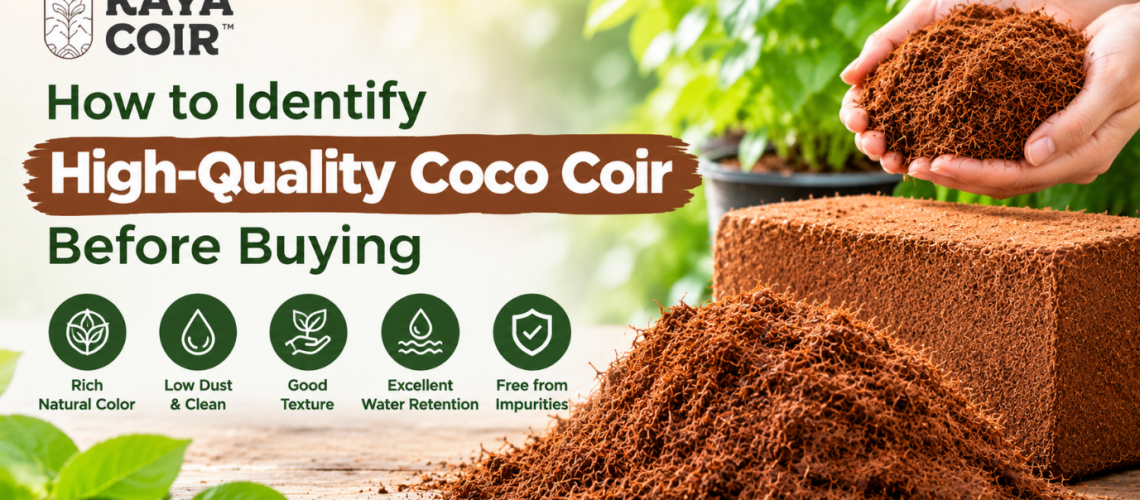
High-quality coco coir gives plants a suitable balance of water retention, airflow, and root support. But how can you tell if a product is worth buying? Start by checking its EC and pH levels, texture, washing process, and water-holding capacity. These details help you judge whether the coir fits your crop and growing system. At Kaya Coir, we know that every grower has different needs. That is why we recommend checking product specifications instead of choosing coir by price or appearance alone. A little research before buying can help you avoid poor-quality media and make a more informed choice.
Table of Contents
- What Makes High-Quality Coco Coir?
- 5 Checks Before Buying Coco Coir
- How to Choose a Reliable Coco Coir Supplier
- Find the Right Coco Coir with Kaya Coir
- Frequently Asked Questions
What Makes High-Quality Coco Coir?
Good coco coir should support healthy root growth while holding enough moisture for your plants. It should also allow excess water to drain and air to reach the roots.
Quality depends on more than appearance. Processing, salt levels, pH, fiber structure, and product consistency all matter. The right specifications will vary based on your crop and growing method.
5 Checks Before Buying Coco Coir
Before you place an order, review these five details:
- Check EC levels: Electrical conductivity indicates the level of soluble salts. Ask for the product’s EC specifications to see if they suit your crop.
- Review pH: Confirm that the pH range fits your growing needs.
- Inspect the texture: Look for a structure suited to your system, whether you need fine coir, fiber, or chips.
- Ask about washing and buffering: These processes affect salt levels and how the medium performs. Confirm the product’s treatment rather than assuming all coir is processed the same way.
- Check consistency: Ask about batch testing, expansion volume, and water retention where relevant.
Also, keep these points in mind when comparing products:
- Clear product details: A reliable supplier should provide useful specifications so you can compare products based on your growing needs.
- Suitable certifications: RHP-certified products may offer added assurance when the certification applies to the specific product you plan to buy.
- Consistent supply: For commercial growing, ask whether the supplier can meet your volume needs and maintain consistent product specifications.
How to Choose a Reliable Coco Coir Supplier
When comparing coco coir manufacturers in the USA, look beyond price. Ask about sourcing, quality checks, product specifications, and available formats. These details help you understand what you are buying.
At Kaya Coir, we offer coco coir growing media for different applications. We encourage growers to review the specifications for each product and match them to their crop, irrigation method, and production goals.
Find the Right Coco Coir with Kaya Coir
Choosing a growing medium should feel straightforward. At Kaya Coir, we help growers explore products that fit their growing needs. Contact us at sales@kayacoir.com or call +1 (310) 698-9111 to discuss our coco coir products and find the right option for your operation.
Frequently Asked Questions
Q. How can you tell if coco coir is good quality?
Check its EC, pH, texture, water retention, and drainage. Ask for product specifications and confirm that the coir suits your crop and growing system.
Q. What is the ideal pH for coco coir?
Many coco coir products list a pH near 5.5–6.5, but ranges vary. Check the supplier’s specifications and your crop’s requirements before buying.
Q. Should coco coir be washed before use?
Some products are washed during processing, while others may need further preparation. Check the supplier’s instructions and EC specifications before using the coir.
Q. Is buffered coco coir better for plants?
Buffered coir can help manage calcium and magnesium interactions in the root zone. Whether you need it depends on the product, crop, and nutrient plan.
Q. How do I choose a coco coir manufacturer?
Look for clear specifications, quality-control practices, suitable certifications, reliable supply, and responsive support. Compare products carefully instead of relying on price or marketing claims alone.


