
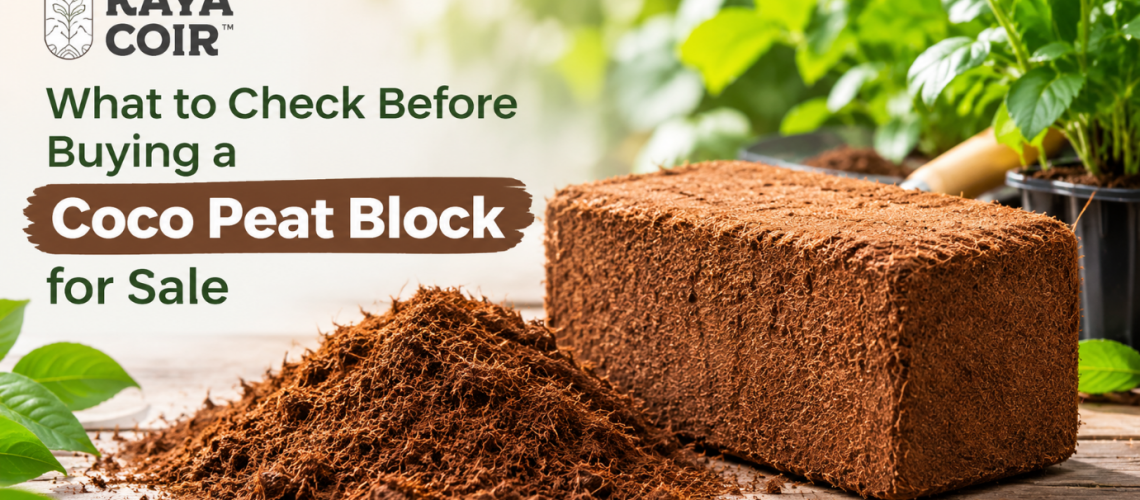
Choosing the right coco peat block can make a real difference in how you grow your plants. A good block should expand well, hold enough water, allow air to reach the roots, and meet the needs of your crop. Before you buy, check its electrical conductivity (EC), pH, buffering, and expansion volume. These details help you judge product quality and avoid problems after planting. At Kaya Coir, we offer coconut-based growing media for different cultivation needs. We believe that understanding these key factors helps you choose a product that works well for your growing setup.
Table of Contents
- Check the Quality of the Coir
- Understand EC, pH, and Buffering
- Compare Expansion Volume and Product Type
- Why Product Certification Matters
- Find the Right Growing Medium with Kaya Coi
- Frequently Asked Questions
Check the Quality of the Coir
Not all coco peat blocks perform the same way. Particle size affects how much water the medium holds and how much air reaches the roots. Fine coir retains moisture, while coarser materials can improve airflow.
We recommend matching the product to your crop, container, and watering method. This is especially important for greenhouse and hydroponic growers who need consistent growing conditions.
Understand EC, pH, and Buffering
EC measures the level of soluble salts in a growing medium. High salt levels can affect water uptake and plant growth. pH also matters because it influences nutrient availability.
Buffered coir is treated to manage certain nutrient interactions. When comparing RHP-certified coir products, review the actual product specifications as well as the certification. Certification does not mean every product has identical EC, pH, or buffering properties.
Compare Expansion Volume and Product Type
Before choosing a block, check how much growing medium it produces after hydration. This helps you estimate how many blocks you need for your growing area.
Use these steps to compare products:
- Check the expansion volume. Review the stated volume after adding water so you can plan your growing needs.
- Choose the right format. Compressed blocks suit compact storage, while loose-fill coir may be more convenient when you need ready-to-use media.
- Review the intended use. Check whether the product suits your crop, irrigation system, and container size.
If you are comparing a coco peat block for sale, look beyond the price. Product specifications and suitability matter just as much.
Why Product Certification Matters
Quality standards can help buyers assess growing media with greater confidence. RHP certification relates to growing-media quality and production requirements. Still, it is important to verify the certification and specifications of the product you plan to buy.
At Kaya Coir, our range includes compressed coco blocks, loose-fill coir, coco chips, and slabs. We provide product information to help growers compare options for their cultivation needs.
Find the Right Growing Medium with Kaya Coir
We know that choosing a growing medium involves more than comparing prices. The right product should fit your crop, growing system, and handling needs.
Explore the compressed blocks, loose-fill media, coco chips, and slabs available from Kaya Coir. For product details or help comparing options, contact our team at sales@kayacoir.com or call +1 (310) 698-9111. We can help you review the available information and make a more informed choice.
Frequently Asked Questions
What is a coco peat block used for?
A coco peat block provides a growing medium for plants. After hydration, it can be used in containers, grow bags, propagation, and suitable hydroponic systems.
How do you prepare a coco peat block?
Add clean water according to the manufacturer’s instructions. Let the block expand, loosen the material, and check for dry clumps before using it.
What EC level should coco peat have?
The right EC depends on the crop and growing system. Check the product specification and consider your irrigation water and nutrient solution before choosing a medium.
Is buffered coco peat better for plants?
Buffered coco peat can help manage nutrient interactions, including those involving calcium and magnesium. Its suitability depends on the crop, product quality, and nutrient plan.
Why choose RHP-certified coir products?
RHP certification provides quality assurance for growing media under its applicable standards. Buyers should still check product-specific data to confirm that the medium suits their growing needs.


